Is Trump Snatching Defeat from the Jaws of Victory in Iran?
by John D. O’Connor
It would be quite a feat to make Hakeem Jeffries appear wise or to render Chuck Schumer principled. But such will be the effect of the putative Iran peace deal if it is consummated.
It is not too late to back out, and it is certainly possible to do so over the next sixty days of negotiations. But if the Trump Administration goes through with any deal over this period, it is very likely that America will have given up all leverage and the possibility of lasting world peace, while getting little in return.
First, what does the United States actually gain from the Iran peace deal that it could not have obtained otherwise? And does Iran, in turn, achieve its central objective of keeping the IRGC intact and powerful? If so, the IRGC leopard will not be changing its spots any time soon. The Strait of Hormuz would apparently be reopened immediately, but this is a dubious benefit, since renewed bombing could have forced it open in any case, and indeed seems already to have opened one of the two main lanes as we speak. In any event, further bombing would eventually have reopened the Strait.
Still to be achieved is negotiating the main putative benefits – the abandonment of Iran’s nuclear program, accompanied by a handover of all enriched uranium, presumably with some inspection regime. But we have already hamstrung the nuclear program, and it remains to be seen what safeguards and inspections we will document. Continued ability to bomb does not require an agreement and may be the best enforcement mechanism.
Finally, the U.S. will receive some promise that Iran will not support terrorism in the future. The latter promise, quite significant if honored, will be impossible to enforce, precisely why Iran has supposedly agreed to it. How can we verify there has been no transfer of funds to Hamas, Hezbollah, or the Houthis? Verification is impossible.
And aren’t we giving a strong signal when the negotiators persuaded the U.S. to, in turn, force Israel to cease attacks on Hezbollah in Lebanon? Will the IRGC abandon these proxies? We are fools to believe this.
So, what is the U.S. getting in this Iran deal? A drop in gasoline prices, perhaps a month or two earlier than we could have forced open the Strait without any deal? What does Iran receive? It appears that, at the outset, Iran would receive at least partial sanctions relief worth billions of dollars. Certainly, Iran would gain an end to our strangling of its financial lifeline through our very effective blockade. And yet, we won’t have any assurance this week on the nuclear prong of the inchoate deal.
The IRGC will now live to fight another day. Iranian citizens will still be oppressed, especially women and gays, with dissenters still subject to execution.
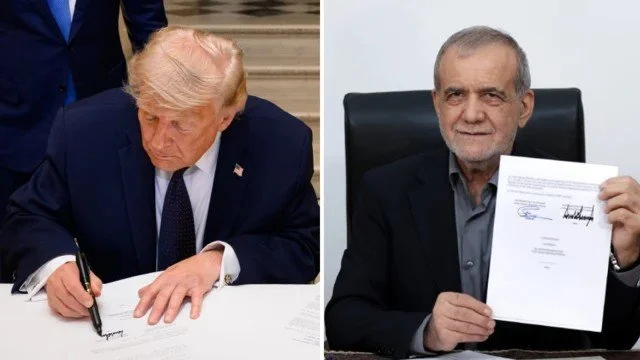
Trump will act as though he is a consequential dealmaker, but critics will see this agreement as a hollow, narcissistic piece of paper designed to coincide with the President’s birthday and his UFC celebratory White House event.
Democrats will argue that America received little for a “war of choice,” an absurd but rationally attractive label. The claim will also be that a naive president was led into a war by Israel based on overly optimistic assumptions. He will also not be seen as a skilled negotiator, giving away his leverage for little in return. Even if a final deal after sixty days of wrangling will seem fine, why couldn’t we simply bomb Iran until they sign what we will be begging them to sign over the next sixty days? Of course, the IRGC will remain in control, notwithstanding any contrary claims.
The operation against Iran was brilliant, bold, and politically courageous, and for a moment the world stood on the brink of a lasting peace that would have left China isolated and easier to restrain. Instead, with the stroke of a pen on this deal, Hakeem Jeffries and Charles Schumer can dust off their halos and prepare to wear them proudly.
_______________
John D. O’Connor is a former federal prosecutor and the San Francisco attorney who represented W. Mark Felt during his revelation as Deep Throat in 2005. O’Connor is the author of the books Postgate: How the Washington Post Betrayed Deep Throat, Covered Up Watergate and Began Today’s Partisan Advocacy Journalism and The Mysteries of Watergate: What Really Happened. O’Connor and Mark Felt also collaborated on the 2006 book, A G-Man’s Life.